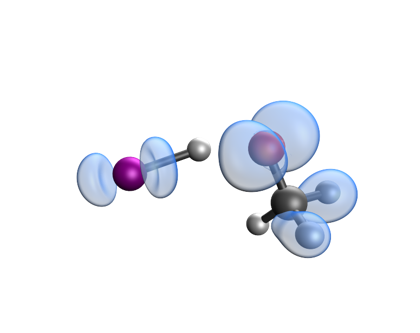

RESEARCH
Research
Our research focuses on understanding and designing molecular catalysts for sustainable chemical transformations, with particular emphasis on homogeneous catalysis and transition-metal-mediated reactivity. We are interested in uncovering the fundamental principles that govern catalytic activity, selectivity, and reaction pathways, especially the interplay between metal centers, ligands, and substrates.
A major research theme in our group is metal–ligand cooperation (MLC), particularly in pincer-based and other well-defined molecular complexes. We investigate how ligand-assisted proton and hydride transfers, coordination-site flexibility, and multisite cooperativity contribute to catalytic transformations, including CO₂ hydrogenation, dehydrogenation, and borrowing-hydrogen reactions. Our work aims to establish mechanistic principles that extend beyond conventional MLC paradigms and broaden the understanding of cooperative catalysis across different metal centers and ligand architectures.
We employ density functional theory (DFT) and advanced electronic-structure analysis to elucidate reaction mechanisms and establish the origins of catalytic reactivity and selectivity. By integrating methods such as ETS-NOCV, energy decomposition analysis (EDA), natural bond orbital (NBO) analysis, and noncovalent interaction analysis, we seek to develop a detailed and quantitative understanding of chemical bonding, metal–ligand interactions, and catalyst–substrate recognition.
Beyond conventional mechanistic studies, we are also exploring data-driven approaches to computational catalyst discovery. By combining quantum-chemical calculations, physically meaningful molecular descriptors, and interpretable machine-learning models, we aim to identify structure–activity relationships, predict catalytic performance, and accelerate the screening and rational design of molecular catalysts.
Join Us
We welcome motivated students interested in computational chemistry, homogeneous catalysis, reaction mechanism elucidation, electronic-structure analysis, and machine learning. We encourage curiosity-driven research that combines fundamental chemical insights with emerging computational tools to advance sustainable catalysis and molecular discovery.
PUBLICATIONS
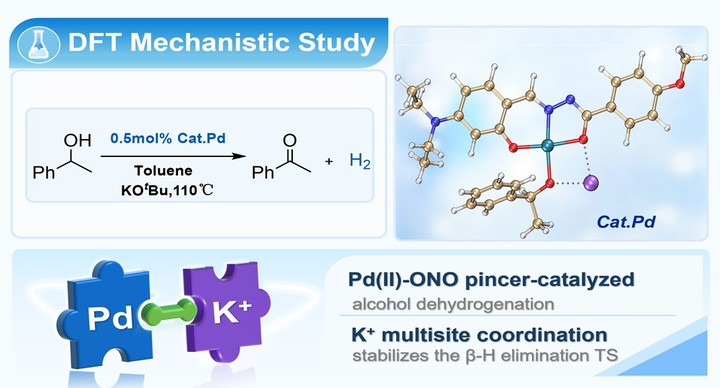
Mechanistic Study of Pd(II) Pincer-Catalyzed Acceptorless Alcohol Dehydrogenation: The Crucial Role of the K+ Counterion.
Jia-Hui Deng and Cheng Hou*.
The Journal of Physical Chemistry A, 2026, 130,8337−8347
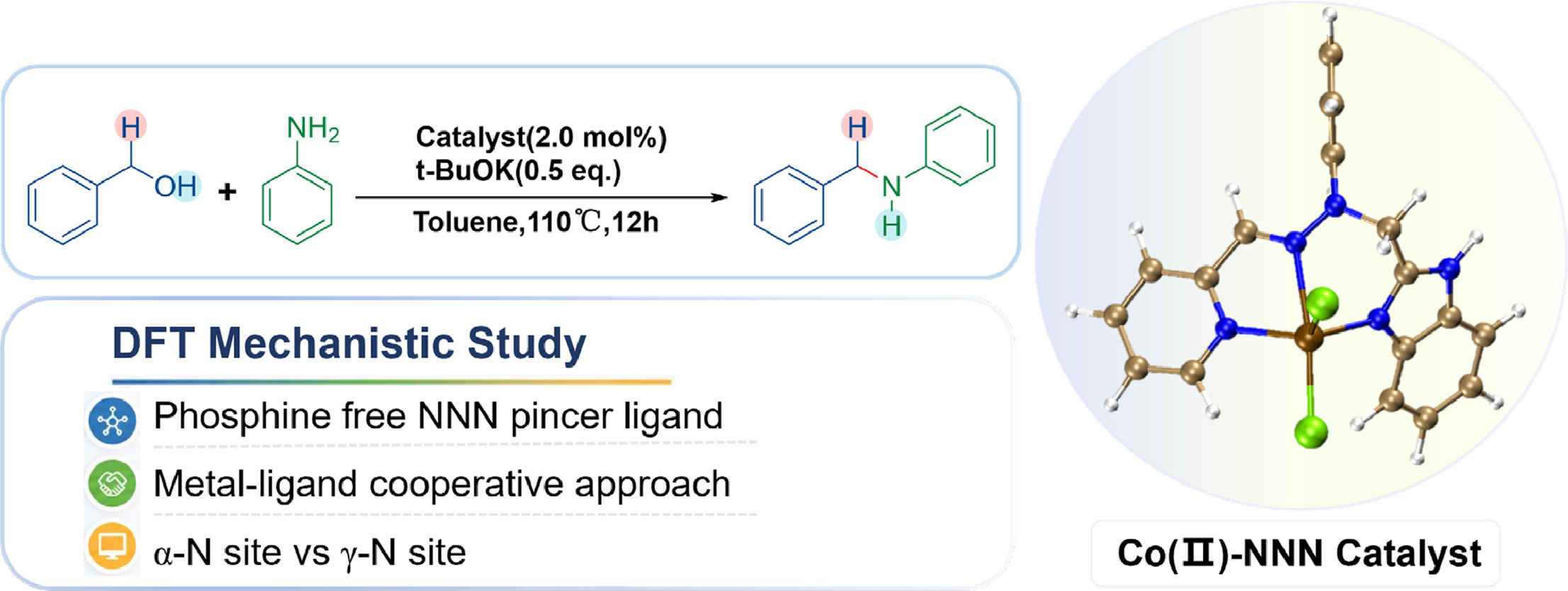
Mechanistic origin of ligand site preference in Co(II)-catalyzed borrowing-hydrogen N-alkylation: The critical role of non-covalent interactions
Yun-Xiang Nong and Cheng Hou*.
Molecular Catalysis 603 (2026) 116274
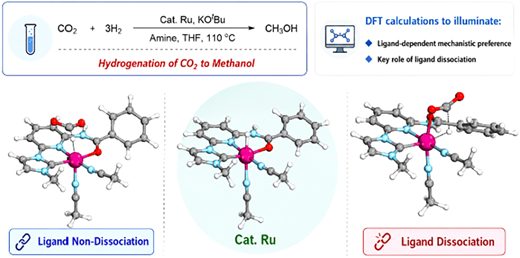
Revealing the Role of Ligand Dissociation in Ru(II) Pincer-Catalyzed CO2 Hydrogenation to Methanol
Han-Ying Tian and Cheng Hou *
Inorganic Chemistry, (2026) 65 (31): 18102–18112.
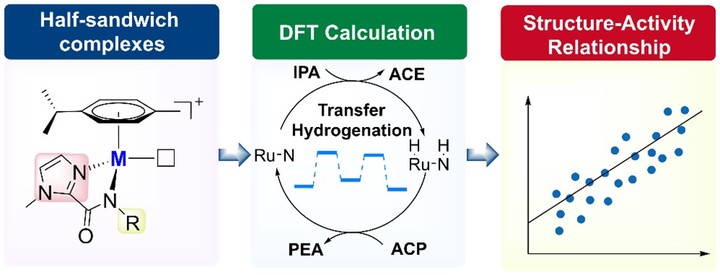
DFT and machine learning insights into Ru(ii) complex-catalyzed transfer hydrogenation
Gui-Xiang Zhou and Cheng Hou*
Organic Chemistry Frontiers, 2026, 13, 3091–3102.
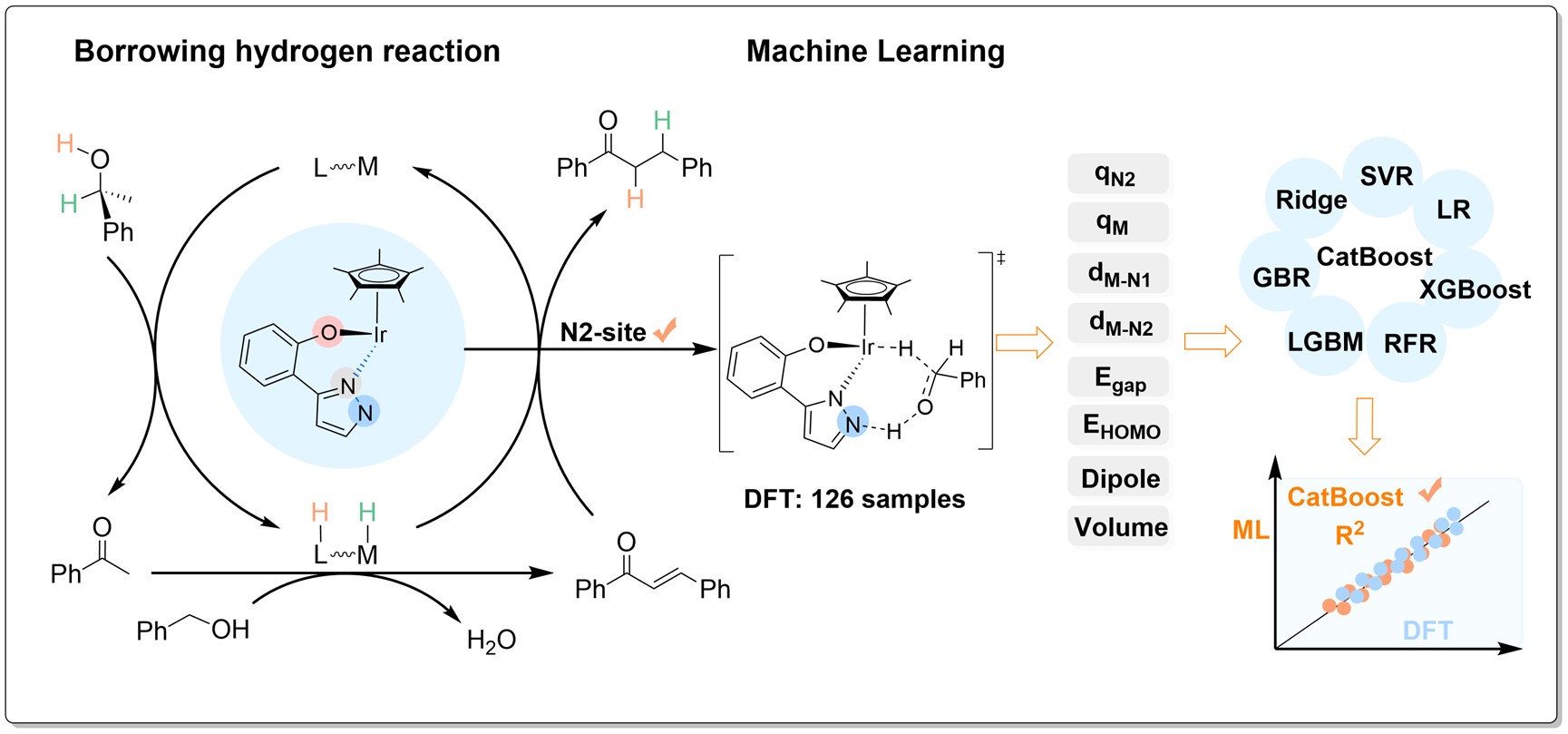
Mechanistic and Machine Learning Insights into Borrowing Hydrogen Reactions Catalyzed by Transition Metal Complexes with N-Heterocyclic Ligand.
Hui-Qi Mo and Cheng Hou*
Organic Chemistry Frontiers, 2025, 12, 6902–6914.
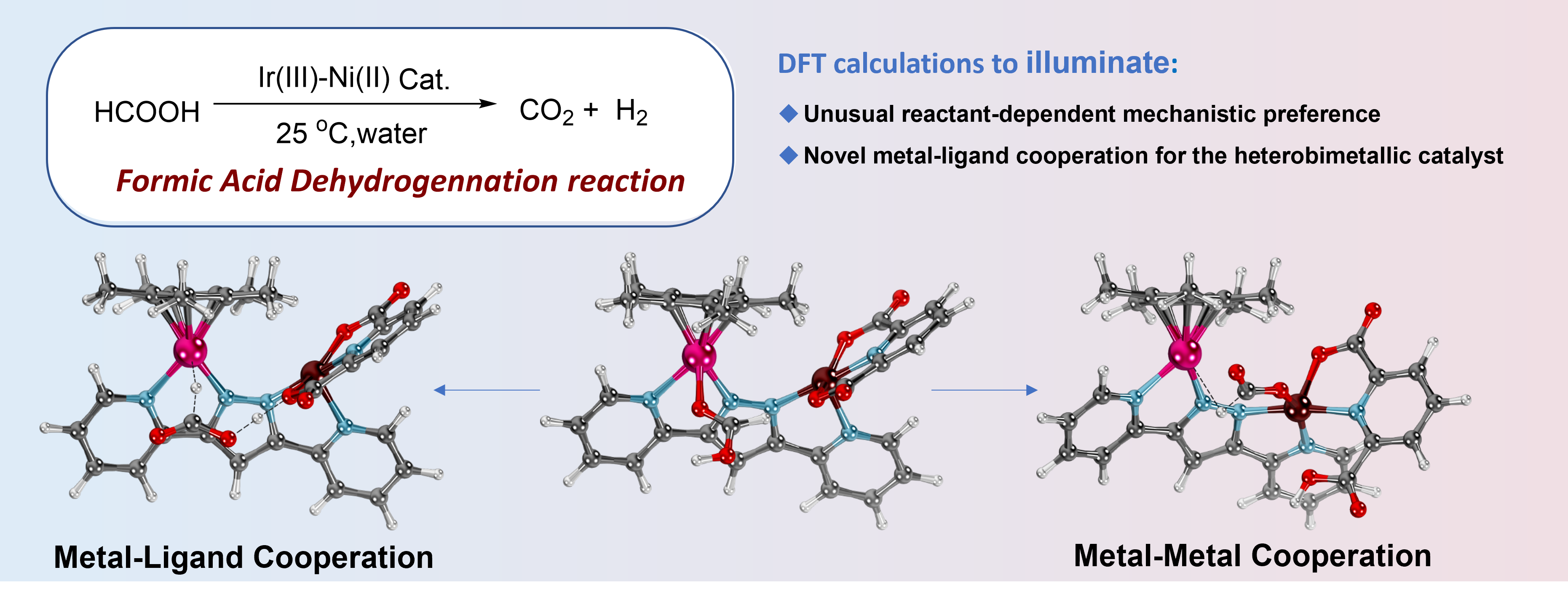
Deciphering the mechanistic landscape of formic acid dehydrogenation with the heterobimetallic Ir(iii)–Ni(ii) catalyst
Lan-Yu Li,† Hui-Qi Mo,† Pan Chen, Jianju Zheng and Cheng Hou*
Dalton Transactions, 2025,54, 13282–13293.
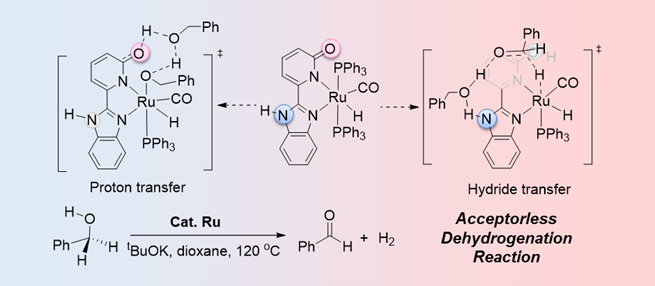
Mechanistic insight into the dehydrogenation reaction catalyzed by an MLC catalyst with dual ancillary ligand sites
Gui-Xiang Zhou and Cheng Hou*
Organic Chemistry Frontiers, 2025, 12, 115-122
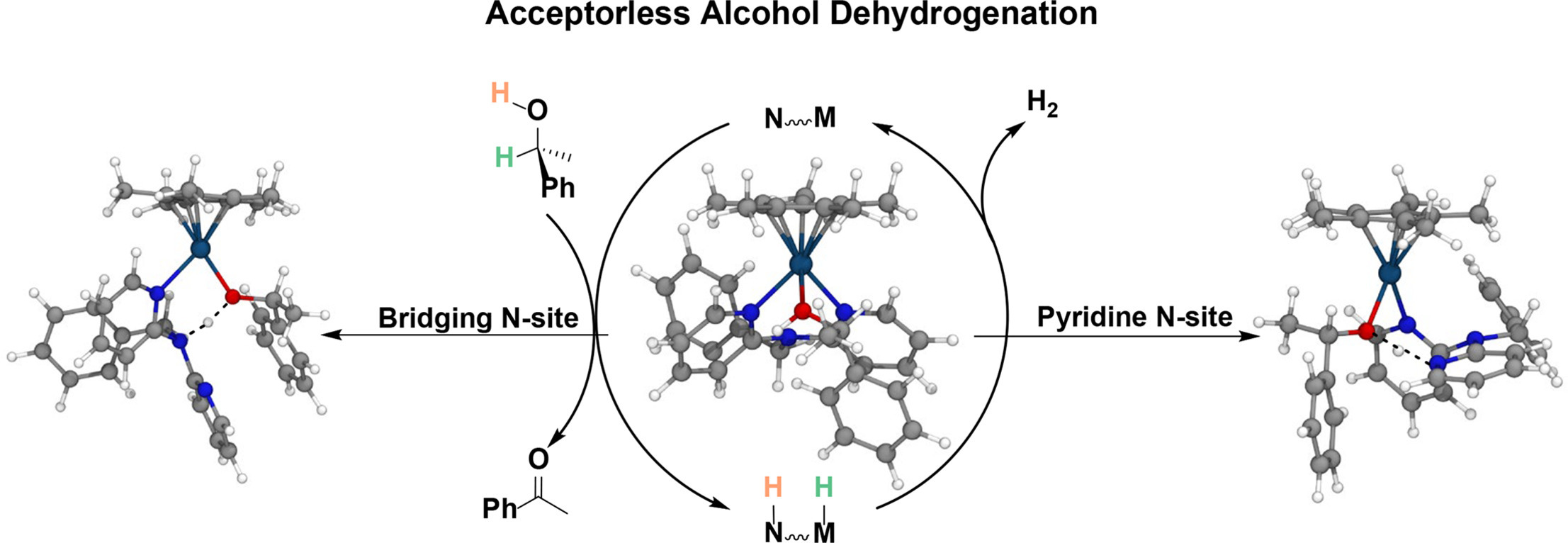
Exploring mechanistic preferences and influencing factors in acceptorless dehydrogenation reactions catalyzed by an Ir(iii)-dipyridylamine complex: A DFT study
Hui-Qi Mo and Cheng Hou*
Molecular Catalysis, 2024, 569, 114644
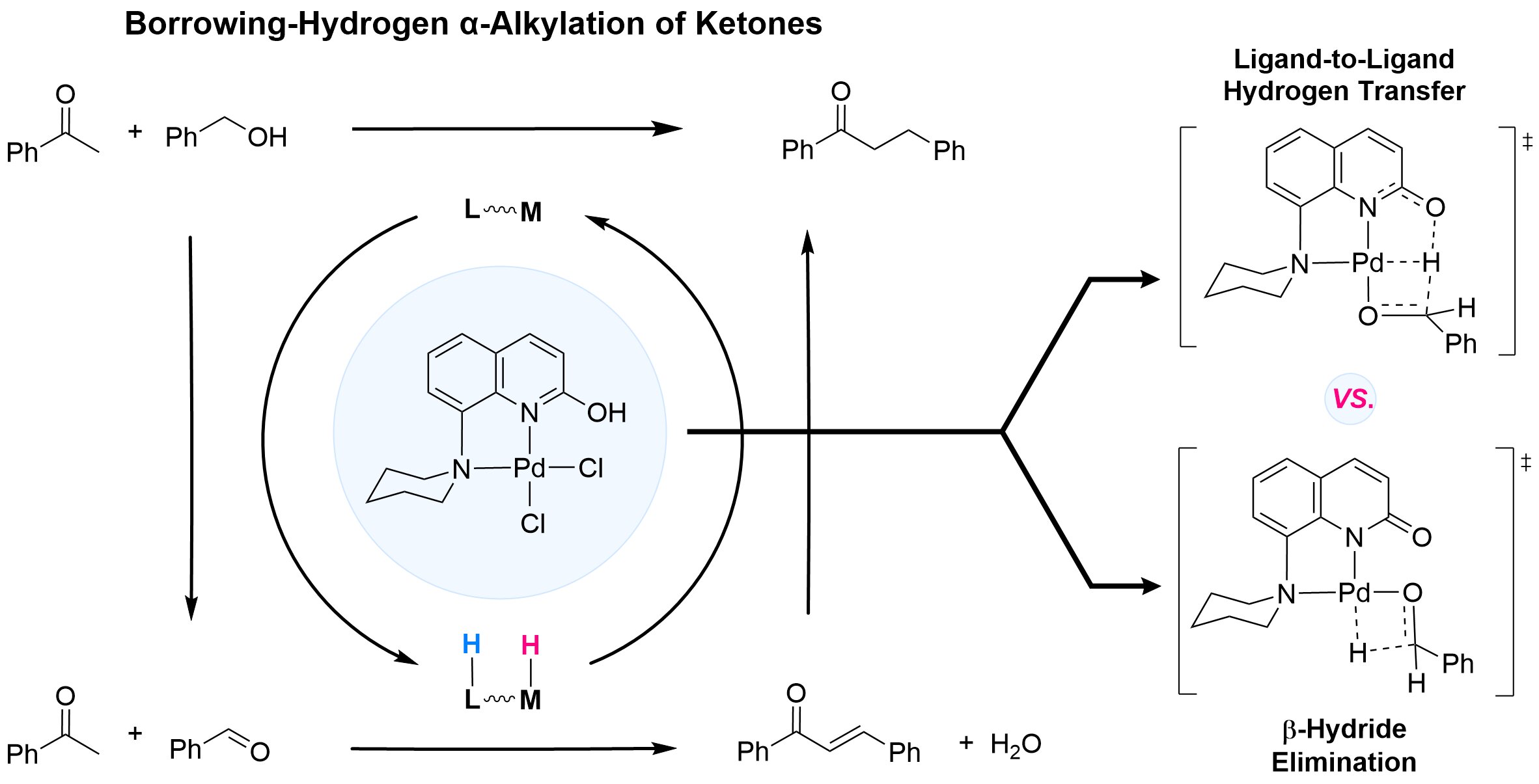
Mechanistic insight into the borrowing hydrogen reaction catalysed by Pd MLC catalyst: Unveiling the ligand-to-ligand hydrogen transfer pathway
Lan-Yu Li, Cheng Hou*
Organic Chemistry Frontiers, 2024, 11, 3997-4006
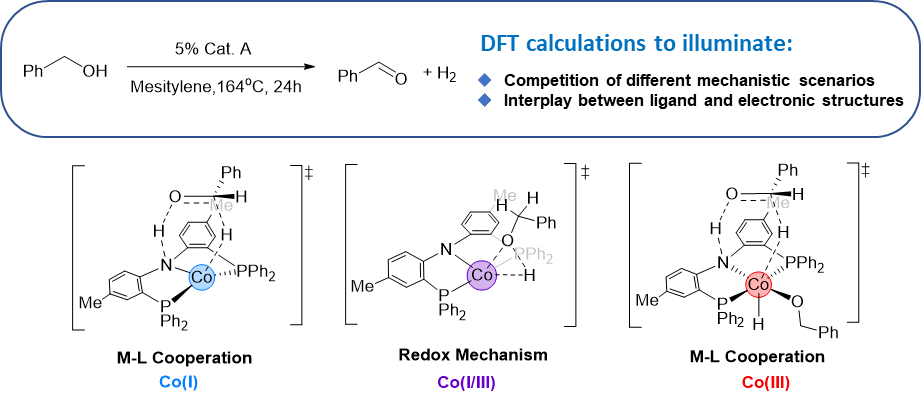
Mechanistic understanding of the acceptorless dehydrogenation reaction catalyzed by low valent Co (I) complex
Datai Liu, Cheng Hou*
Inorganic Chemistry Communications, 2024, 165, 112571

Mechanistic investigation of the transfer hydrogenation of alkynes catalysed by an MLC catalyst with multiple ancillary ligand sites
Yuan Zhang, Lan-Yu Li and Cheng Hou*
Organic Chemistry Frontiers, 2023, 10, 3766–3775

Mechanistic insight into the borrowing-hydrogen N-alkylation catalyzed by an MLC catalyst with dual proton-responsive sites
Lan Mei, Min Du, Yuan Zhang and Cheng Hou*
Dalton Transactions, 2022, 51, 16215-16223

Exploring the conversion mechanism of formaldehyde to CO2 and H2 catalyzed by bifunctional ruthenium catalysts: A DFT study
Min Du, Jianju Zheng, Lan Mei, Yuan Zhang, Cheng Hou*
Molecular Catalysis, 2022, 530, 112630.

Mechanistic insight into the isomerization of allyl alcohol catalyzed by the Co(II)-PNP catalyst: Crucial role of spectator ligand
Jianju Zheng, Min Du, Datai Liu, Lan Mei, Cunji Gao*, Cheng Hou*, Xing-CanShen
Molecular Catalysis, 2021, 516, 111957.

Transition metal center effect on the mechanism of homogenous hydrogenation and dehydrogenation
Cheng Hou, Yinwu Li and Zhuofeng Ke*
Inorganica Chimica Acta, 2020, 511, 119808.

The origin of different driving forces between O–H/N–H functional groups in metal ligand cooperation: mechanistic insight into Mn(i) catalysed transfer hydrogenation
Li Zhou, Datai Liu, Haiyi Lan, Xiujian Wang, Cunyuan Zhao*, Zhuofeng Ke*, Cheng Hou*
Catalysis Science & Technology, 2020, 10, 169-179.
Research Work Prior to Joining Guangxi Normal University

A DFT study of Co(I) and Ni(II) pincer complex-catalyzed hydrogenation of ketones: intriguing mechanism dichotomy by ligand field variation
Cheng Hou, Yinwu Li, Cunyuan Zhao,* and Zhuofeng Ke*
Catalysis Science & Technology, 2019, 9, 125-135.

When Bifunctional Catalyst Encounters Dual MLC Modes: DFT Study on the Mechanistic Preference in Ru-PNNH Pincer Complex Catalyzed Dehydrogenative Coupling Reaction
Cheng Hou, Jingxing Jiang, Yinwu Li, Cunyuan Zhao,* and Zhuofeng Ke*
ACS Catalysis, 2017, 7, 786-795.

DFT Study of Acceptorless Alcohol Dehydrogenation Mediated by Ruthenium Pincer Complexes: Ligand Tautomerization Governing Metal Ligand Cooperation
Cheng Hou, Zhihan Zhang, Cunyuan Zhao,* and Zhuofeng Ke*
Inorganic Chemistry, 2016, 55, 6539-6551.

Unusual non-bifunctional mechanism for Co-PNP complex catalyzed transfer hydrogenation governed by the electronic configuration of metal center
Cheng Hou, Jingxing Jiang, Yinwu Li, Zhihan Zhang, Cunyuan Zhao* and Zhuofeng Ke*
Dalton Transactions, 2015, 44, 16573-16585.

Hydrogenation of Carbon Dioxide Using Half-Sandwich Cobalt,Rhodium, and Iridium Complexes: DFT Study on the Mechanism and Metal Effect
Cheng Hou, Jingxing Jiang, Shidong Zhang, Guo Wang, Zhihan Zhang, Zhuofeng Ke,* and Cunyuan Zhao*
ACS Catalysis, 2014, 4, 2990-2997.
Group Members

侯成 HOU Cheng
2007-2011,Sun Yat-sen University,BSc
2012-2017,Sun Yat-sen University,Ph.D
2017 to date, Guangxi Normal University, Associate Professor
Email: houcheng@gxnu.edu.cn

田汉英 TIAN Hanyin
2024 Master Student
Email:
Education: BSc Chemistry. Liupanshui Normal University

邓嘉慧 DENG Jiahui
2024 Master Student
Email:
Education:BSc Chemistry. Zhaoqing University

农云翔 NONG Yunxiang
2024 Master Student
Email:
Education:BSc Chemistry. Guangxi Minzu Normal University

刘明桢 LIU Mingzhen
2025 Master Student
Email:
Education:

毛元寒 MAO Yuanhan
2025 Master Student
Email:
Education:BSc Chemistry. Yancheng Institute Of Technology

李卓凡 Li Zhuofan
2026 Master Student
Email:
Education:BSc Chemistry.

曾专凤 Zeng Zhuanfeng
2026 Master Student
Email:
Education:BSc Chemistry.

潘颖珊 Pan Yingshan
2026 Master Student
Email:
Education:BSc Chemistry.
Former Members

刘大泰
LIU Datai
2019-2022,GXNU,Ms.C

郑检菊
ZHENG Jianju
2019-2022,GXNU,Ms.C

杜敏
DU Min
2020-2023,GXNU,Ms.C

梅兰
MEI Lan
2020-2023,GXNU,Ms.C

张丛
ZHANG Cong
2016-2020,GXNU,B.S
2020 to date, Nankai University, Ph.D

周婷霞
ZHOU Tingxia
2017-2021,GXNU,B.S
2021 to date, SYSU, Ph.D

张苑
Zhang Yuan
2017-2021, GXNU, B.S
2021-2024, GXNU, Ms.C

农皓翔
Nong Haoxiang
2020-2024, GXNU, B.S
2024 to date, SUSTec, Ms.C.

李兰钰
Li Lan-Yu
2018-2022,Tianjin University of Commerce,B.S
2022-2025, GXNU, Ms.C.

莫惠琪
MO Hui-Qi
2019-2023,Sichuan Normal University,B.S
2023-2026, GXNU, Ms.C.

周桂湘
ZHOU Gui-Xiang
2018-2022,Jiangsu Normal Univerisity,B.S
2023-2026, GXNU, Ms.C.
TOOlS

GXNU MolStudio
GXNU MolStudio is a molecular visualization and quantum chemistry software with an OpenGL engine, supporting one‑click style switching (sob‑art, IBOview, HoukMol, IQmol) for WYSIWYG orbital rendering from fchk files. It integrates Multiwfn‑based functions: IGMH/IRI, ESP, NBO, charge/bond orders, plus hydrogen hiding and atom numbering.
https://cnb.cool/chem311/GXNU-MolStudio

xTBridge
xTBridge is a desktop computing frontend pre-optimized for xTB, supporting Gaussian, xTB, and ORCA. It uses xTB for rapid coarse screening to obtain a reasonable initial structure, which is then fed into Gaussian or ORCA for high-precision calculations.
https://github.com/houcheng-gxnu/xTBridge
https://cnb.cool/chem311/xTBridge
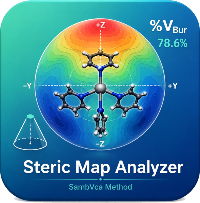
Steric Map Analyzer
Steric Map Analyzer is a powerful desktop application built with PyQt5, leveraging the StericRender computing engine at its core. It offers a complete workflow that covers molecule loading, parameter configuration, steric calculation, and multi‑format export.
https://github.com/houcheng-gxnu/StericMapAnalyzer
https://cnb.cool/chem311/stericmap
Album